

 +86-18615202650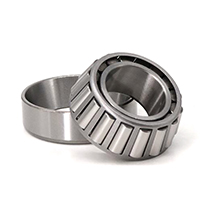
2026-01-08
Bearing raceway noise generation mechanisms in NTN deep-groove ball bearings
Rolling sound is one of the most direct “health indicators” of any rotating machine, and NTN deep-groove ball bearing assemblies are no exception. When the balls pass over microscopic undulations on the raceway, a wide-band audible hiss—often called “raceway noise”—is radiated. The phenomenon is not a sign of poor quality; it is the inevitable result of the Hertzian contacts exciting the bearing rings, housing and surrounding air. Yet the amplitude, spectral shape and repeatability of the sound carry rich information about surface finish, lubrication film, contamination and mounting accuracy. Understanding these relationships allows engineers to move from “acceptance limits” to “diagnostic limits”, cutting field complaints and warranty cost.
2025-12-31
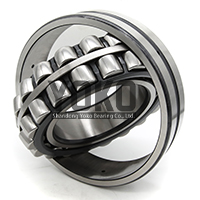
Spherical Roller Bearing Lubrication Maintenance Cycles and Operation Points
Spherical roller bearings are critical components in heavy-duty industrial applications, requiring systematic lubrication maintenance to ensure optimal performance and extended service life. Understanding proper lubrication intervals and maintenance procedures is essential for preventing premature bearing failure and minimizing costly downtime.
2025-12-26
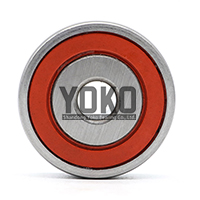
Deep Groove Ball Bearing Lubrication: Cycle Requirements & Key Operation Points
A deep groove ball bearing can run for millions of revolutions—if the lubricant film is maintained. The first step is to fix the re-greasing interval. For electric motors, pumps and fans running 8 h/day at ≤75 °C, the baseline is 4 000–5 000 operating hours or 12 months, whichever comes first. Double the speed (3 000 r/min instead of 1 500 r/min) and the interval halves; raise the housing temperature to 90 °C and it quarters. Convert hours to calendar time only after you know the real duty cycle; a standby pump that runs 200 h/year still needs fresh grease every 24 months because oxidation never stops.
2025-12-25
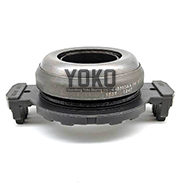
Common Fault Diagnosis and Repair Methods for Clutch Release Bearings
A clutch release bearing—often called a clutch bearing—translates the movement of the clutch fork into smooth disengagement of the clutch disc. When the driver presses the pedal, the clutch bearing moves forward to depress the diaphragm spring, interrupting power flow from the engine to the gearbox. Because this component operates at high speed while exposed to heat, dust and vibration, even minor wear can evolve into serious drivability issues. Recognizing early symptoms and applying the right repair sequence will extend clutch life and prevent roadside breakdowns.
2025-12-19
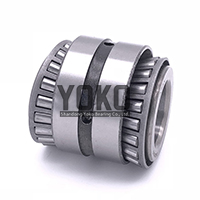
Adjustment Methods for Axial Clearance in Double and Four-Row Tapered Roller Bearings
Axial clearance in tapered roller bearings represents the critical gap between rolling elements and raceways along the shaft axis. For double-row and four-row configurations, proper clearance adjustment ensures optimal load distribution, prevents premature failure, and maintains operational precision. These multi-row bearing arrangements require systematic approaches to achieve manufacturer-specified axial play values.
2025-12-18
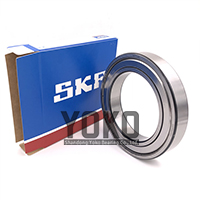
Estimating SKF Bearing Temperature: a Practical Guide for Plant Engineers
An overheated SKF bearing is often the first warning of misalignment, under-lubrication or excessive load. By estimating operating temperature before start-up, engineers can select the right fit, lubricant and sealing concept—cutting unplanned stops and extending mean time between maintenance.
2025-12-11
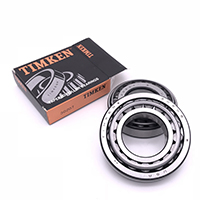
The Impact of TIMEKN Tapered Roller Bearing Grease Upgrades on Energy Consumption
In every rotating machine the bearing is both a load carrier and a power sink. A tapered roller bearing may look static from the outside, yet inside each roller a film of oil only a few micrometers thick is sheared thousands of times per second. That microscopic shear adds up to kilowatts of drag on the shaft and dollars of loss on the utility bill. Re-specifying the grease—nothing more than choosing a different cartridge from the same supplier—can recover a measurable share of those kilowatts without new couplings, new motors or new controls. TIMEKN plants have documented cases in which a single grease upgrade cut bearing friction torque 25 %, lowered housing temperature 12 °C and saved 27 MWh per year on a 200 kW compressor. The following pages explain why the change works, how to calculate the correct viscosity window, and what verified field results look like when the upgrade is rolled out across an industrial site.
2025-12-10
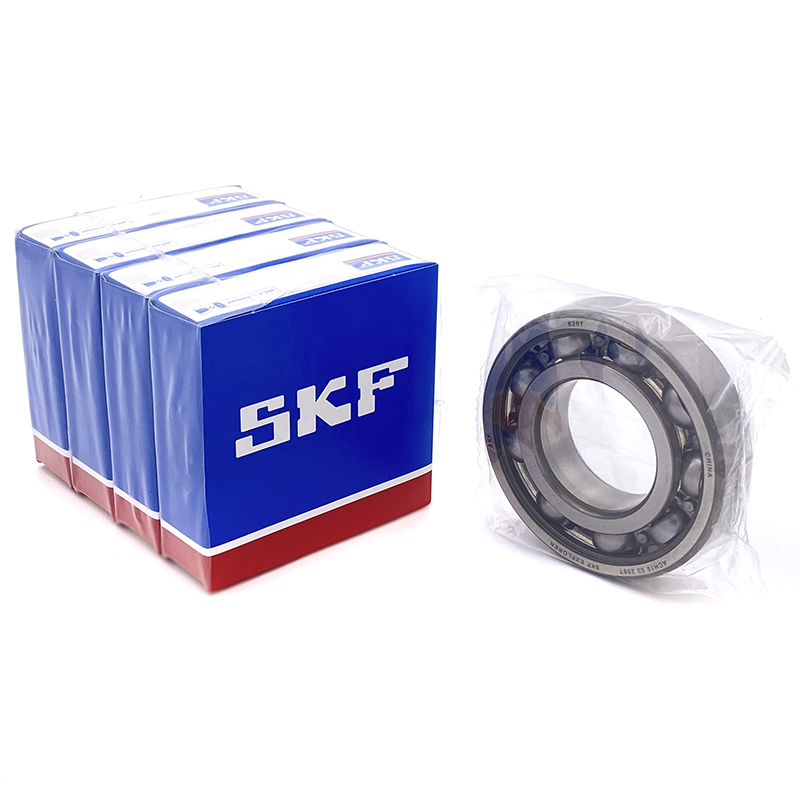
SKF Bearings: Premium Industrial Solutions from Your Authorized Distributor
Your trusted SKF bearing distributor. Explore SKF Explorer bearings, deep groove ball bearings & spherical roller bearings. Fast delivery, technical support & 99.8% inventory availability.
2025-12-10
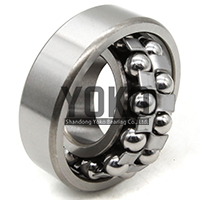
Self-Aligning Ball Bearings: The Quiet Champions of Misaligned Machinery
In the hidden world of rotating machinery, where shafts whisper and housings sometimes “bend the rules” of perfect alignment, self-aligning ball bearings are the unsung diplomats. Unlike their rigid cousins, these bearings carry a subtle super-power: they forgive. Their outer-ring raceway is ground to a gentle spherical curve, allowing the inner ring, balls and cage to tilt up to 3° (and in some designs even 5°) without protest. That small mercy translates into big reliability wherever “perfect” is impossible.
2025-12-04
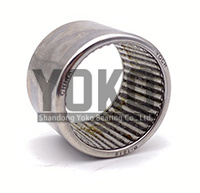
Lubrication and Maintenance Tips for Needle Roller Bearings
To maximize the service life and reliability of needle roller bearings, a disciplined approach to lubrication and maintenance is non-negotiable. Below are field-proven practices that help prevent premature failure, cut unplanned downtime, and keep rotating equipment running at peak efficiency.
2025-12-03
Spherical Bearing Torque Calculation: Complete Guide for Engineers
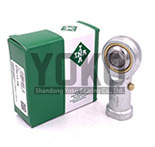
Spherical bearing torque calculation is a critical aspect of mechanical engineering that directly impacts the performance, efficiency, and longevity of rotating machinery. Unlike rolling element bearings, spherical plain bearings operate through sliding contact between spherical surfaces, creating unique torque characteristics that engineers must carefully consider during design and selection processes.
The torque in spherical bearings, also known as rod end bearings or spherical plain bearings, represents the rotational resistance generated by frictional forces between the inner and outer rings. This resistance is influenced by multiple factors including load conditions, lubrication state, surface materials, and operational parameters.
The torque in spherical bearings, also known as rod end bearings or spherical plain bearings, represents the rotational resistance generated by frictional forces between the inner and outer rings. This resistance is influenced by multiple factors including load conditions, lubrication state, surface materials, and operational parameters.
2025-11-28
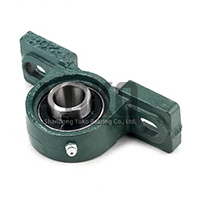
UC Pillow Block Bearing Clearance: The Practical Guide Every Maintenance Team Needs at 2 A.M.
When the night shift radios in that the new UC pillow block is already howling, the first question you ask is not “Who installed it?” but “Did we respect the clearance?” Below is the fast, field-tested playbook that keeps UC inserts alive, keeps conveyors rolling, and keeps you from driving to the plant in your slippers.